Most core banking migrations are declared a success at go-live. The neo-legacy trap is what happens next: constraints that were supposed to disappear quietly return, the platform gets harder to evolve, and the value the institution paid years to unlock starts eroding. The cause is almost always architectural, not organisational. The platform model determines whether an institution escapes legacy complexity or rebuilds it under a different name.
PART OF THE CORE BANKING PLAYBOOK SERIES
Part 1 —> How to buy a 4th-gen core banking system
Part 2 —> How to migrate to a 4th-gen core banking system
Part 3 —> How to unlock commercial value from your 4th-generation core
Summary
-
Moving to a modern core does not automatically prevent neo-legacy. The architecture model of your platform determines whether you escape legacy complexity or rebuild it under a different name.
-
There are two distinct routes into the neo-legacy trap. Platforms that give engineering teams total code freedom to build product logic from scratch. Platforms that are fast to configure but too rigid for the specific requirements of regulation and market differentiation.
-
The first route recreates legacy through accumulation. Total customisation freedom without a governed configuration layer means every product change, every pricing adjustment, every regulatory response is a bespoke engineering project. Over time, the codebase carries the same mass of bespoke logic as the system it replaced.
-
The second route recreates legacy through dependency. Fast-to-configure platforms that reach a ceiling whenever institutions need something specific. The answer is always: wait for the roadmap.
-
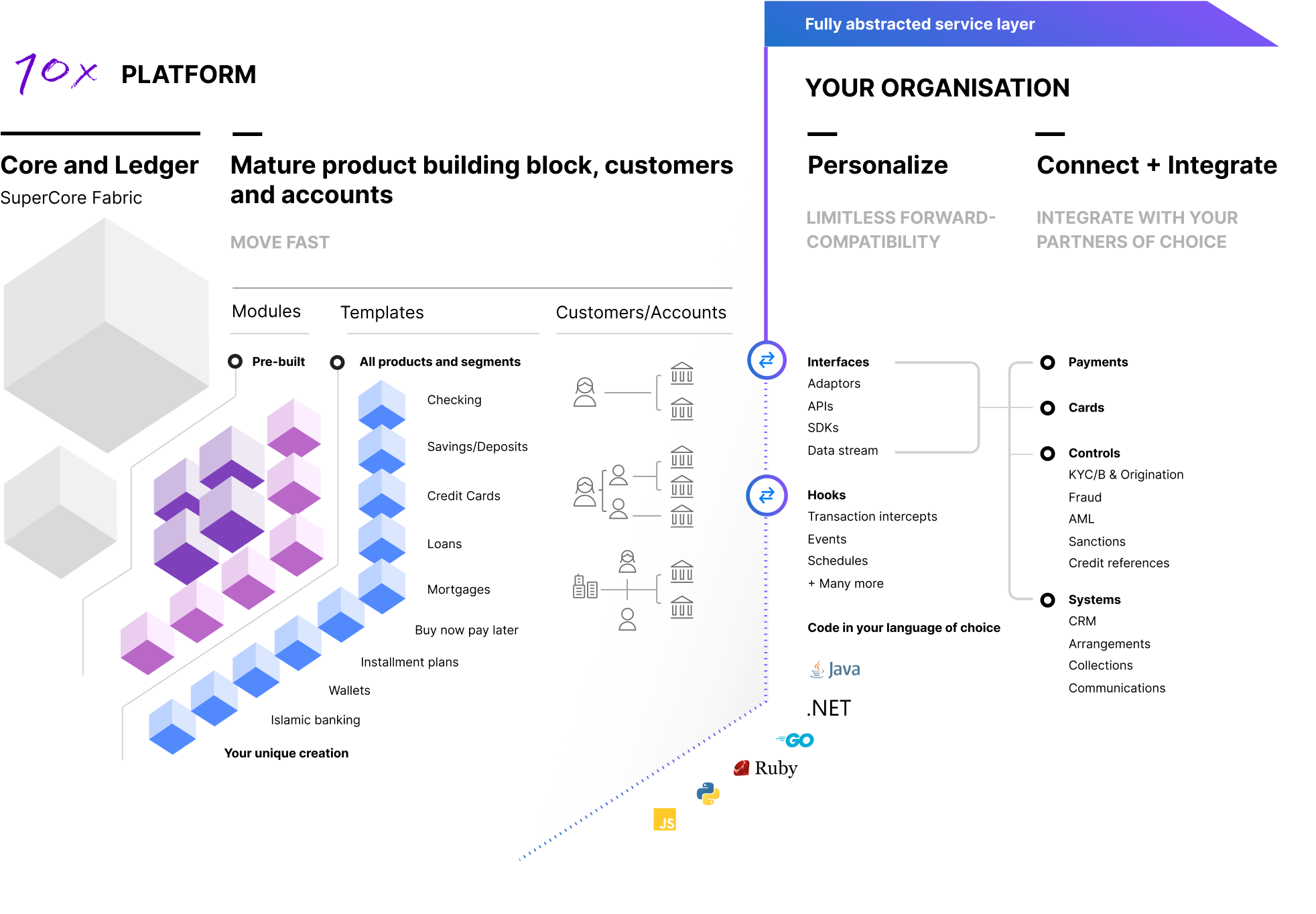
The way out of both is an architecture that keeps configuration and extensibility separate from the core. Fast to build on the standard things. Flexible on the specific things. The core untouched, secure, and continuously updatable.

What is the neo-legacy trap?
There are two distinct routes into the neo-legacy trap
Route one: total code freedom with no configuration layer
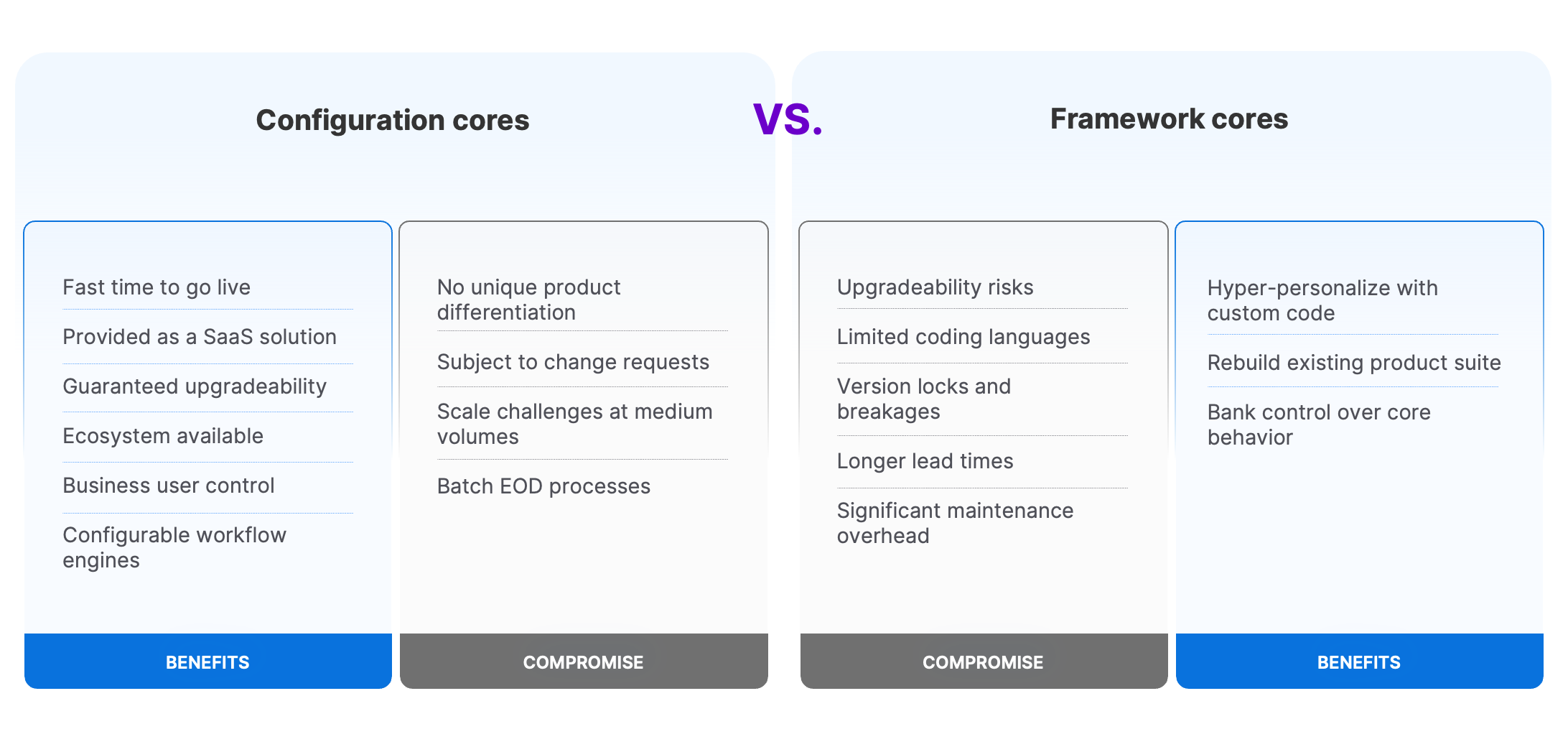
Route two: fast configuration with flexibility ceiling
What the right architecture looks like
Warning signs that the neo-legacy trap is forming
- Change cycle times are increasing post go-live. If product or pricing changes take longer now than they did at go-live, either bespoke code complexity is accumulating or configuration isn't being used where it should be.
- Engineering dependency on routine changes. Product and business teams that should have self-service autonomy are raising engineering tickets for changes that configuration was designed to handle.
- Differentiation is becoming harder, not easier. If the institution is launching fewer distinctive products now than it did two years after go-live, the architecture is constraining innovation rather than enabling it.
- Platform upgrades feel risky. If taking a new version of the core feels like a significant project rather than a routine update, custom logic has likely been built too close to the core rather than through governed extension interfaces.
Legacy vs neo-legacy vs cloud-native comparison table
| Capability | Legacy Core | Neo-Legacy Core | Cloud-Native Core |
|---|---|---|---|
| Continuous Upgrades | No | Limited | Yes |
| Scalability | Limited | Moderate | High |
| Product Agility | Low | Medium | High |
| Technical Debt Risk | High | Medium | Low |
How to avoid neo-legacy and unlock commercial value from your core
The architecture sets the ceiling. The operating model determines whether institutions reach it.
Our playbook covers the governance disciplines and post-go-live checkpoints that translate the right architecture into sustained commercial velocity:
-
how to structure configuration ownership so business teams keep their autonomy
-
how to govern the extensibility layer so it stays upgrade-safe over time
-
where the institutions extracting the most value from a 4th-generation core are focusing their effort
Get your guide
FAQs
What is the neo-legacy trap in core banking?
The neo-legacy trap describes the process by which a modern core banking platform gradually recreates the constraints of legacy infrastructure. It forms either through accumulation of bespoke engineering code (where platforms give total code freedom without a governed configuration layer) or through vendor dependency (where platforms are fast to configure but too rigid for specific regulatory and market requirements). The result is the same: an institution running on new infrastructure but operating under old constraints.
What is the difference between configuration and extensibility in core banking?
Configuration is the ability to define, adjust, and launch products through governed, pre-built parameter frameworks, without writing code. It handles the standard: pricing, eligibility rules, product terms, onboarding logic. Extensibility is the ability to add custom logic through governed extension points, without modifying the core system directly. It handles the specific: regulatory requirements, proprietary risk models, differentiated customer experiences. The two capabilities are complementary. An architecture that offers only one of them forces institutions into one of the two neo-legacy failure modes.
How do you add custom logic to a core banking platform without creating technical debt?
By using governed extension interfaces that are designed to be upgrade-safe. Custom logic should plug into a defined interface above the core, not into the core system itself. This means the institution's bespoke logic persists through platform upgrades without requiring rework. When custom logic is written directly into core platform code, every upgrade becomes a regression risk and the institution is effectively maintaining its own variant of the platform.
Why does platform upgrade risk indicate neo-legacy?
If taking a platform upgrade feels like a significant project, it is usually because custom logic has accumulated in or near the core, rather than in the upgrade-safe extension layer. A well-architected deployment should receive platform upgrades continuously and non-disruptively, because configuration and custom logic are separated from the core by design.
Is the neo-legacy trap avoidable?
Yes, but the platform architecture is the primary determinant, not just governance. An institution on a platform that requires bespoke code for all product logic will accumulate that code regardless of how disciplined its governance is. An institution on a platform that caps flexibility at the configuration layer will hit that ceiling regardless of how good its engineering team is. The right architecture makes avoidance structurally easier, rather than relying on discipline alone.
What is technical debt in core banking?
Technical debt in core banking is the accumulated cost of architecture decisions that prioritise short-term delivery over long-term platform integrity. On modern platforms, it typically manifests as bespoke product logic that only specialist engineers can change, point-to-point integrations that bypass governed interfaces, or custom code written directly into the core that breaks on upgrade. The result is increasing change cycle times, engineering dependency on routine operations, and declining ability to take platform improvements.