After attending FTT Lending, Theo Youngman, Commercial Lead at 10x Banking, breaks down how lenders are transforming SME lending through faster experimentation, smarter data use, and more agile decision making.
Across the sessions, one theme came through consistently: lenders are not stepping away from growth, but they are becoming far more deliberate in how they test, learn, and adjust.
From large changes to controlled experimentation
Several discussions pointed to a shift away from large, infrequent policy changes towards smaller, more structured experiments.
Rather than making broad adjustments based on historical trends, lenders are increasingly:
-
testing specific hypotheses
-
running shorter pilots
-
measuring outcomes in real time
-
feeding results back into decision making quickly
This feels less like a change in strategy and more like a shift in operating model. The emphasis is on learning continuously rather than waiting for periodic review cycles.
From a practical standpoint, this raises an important question: how easily can these changes actually be implemented day to day?
The ability to adjust products, policies, or workflows quickly and safely becomes critical if this way of working is to move beyond isolated pilots.
Why operating model matters as much as strategy
A recurring theme was that many lenders already know where they want to innovate, the constraint is not ambition but execution. The areas that prompted the most excitement were spaces like underwriting and product design.
The challenge is meeting the following checklist, to run controlled experiments which consistently require:
-
clean, accessible data
-
workflows that can adapt without heavy rework
-
clear visibility of outcomes
-
governance that allows smaller changes to move quickly
Without these foundations, even simple tests become difficult to deliver.
In practice, this is where operating model and technology become closely linked. If changes rely on long release cycles or significant engineering effort, the ability to test and iterate quickly is naturally constrained.
Where AI is proving useful today
AI came up frequently, but it’s moved away from hype to a very practical context.
The focus was not on full automation, but on reducing manual effort and helping teams focus their attention more effectively.
Examples discussed included:
-
summarizing large lending packs
-
extracting structured data
-
highlighting inconsistencies
-
supporting internal QA and policy interpretation
A point that stood out came from Nicholas Moss, Chief Commercial and Product Officer at Birmingham Bank. He noted that underwriters are not hired because they are good at reading PDFs.
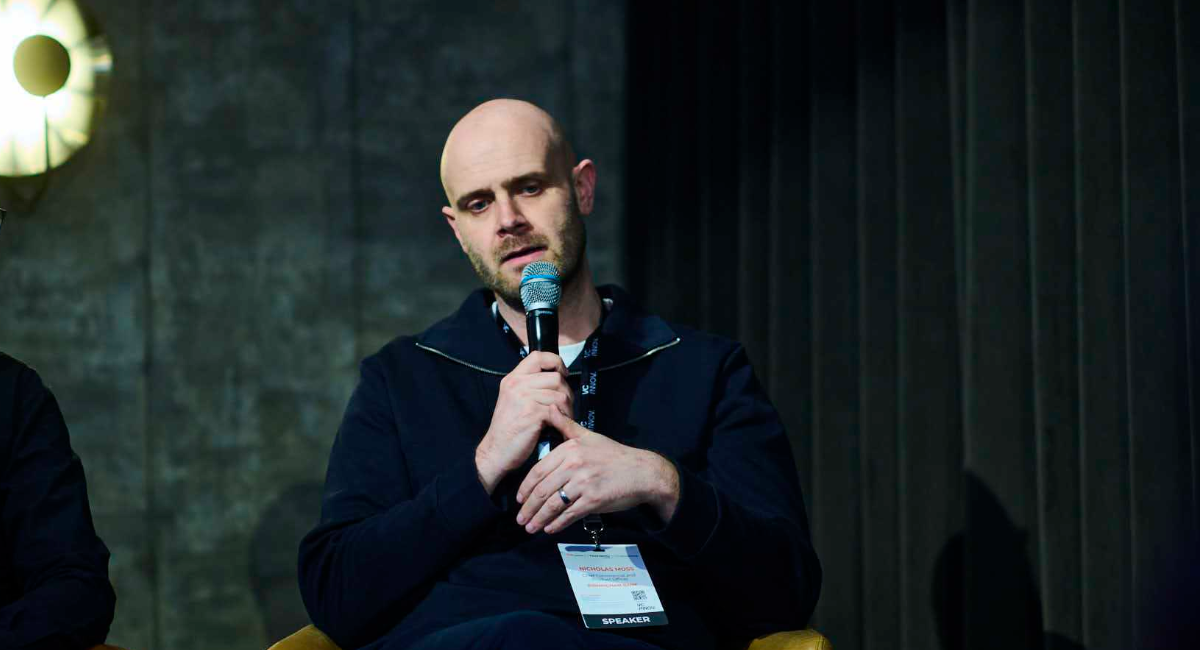
Nicholas Moss, Chief Commercial and Product Officer at Birmingham Bank discusses practical uses of AI
His point neatly captures where AI is proving most useful today. The value is not in replacing judgement, but in reducing the manual effort around processing large volumes of information, so teams can focus on decision making.
There was also a clear dependency on the underlying data and processes. Where data is fragmented or workflows are inconsistent, the value of these tools becomes harder to realize in a meaningful way.
Reframing the SME opportunity
One of the more interesting discussions centered on how the SME market is often described. Conrad Ford, Chief Strategy Officer at Allica Bank, offered a useful lens. He shared how much of the attention tends to focus on smaller, unsecured, digitally enabled lending, while a significant proportion of the market sits with more established businesses, often requiring more complex, secured lending structures.
What this highlights is a structural gap. Established SMEs are often:
-
too complex for highly standardized, mass-market approaches
-
but not large enough to justify full corporate banking models
There was also a useful observation that, in many cases, the challenge is not credit quality, but cost to serve. Serving a high volume of smaller, more complex lending cases can be operationally expensive.
This is where the conversation starts to move beyond distribution or product design and into how the underlying platform supports scale and efficiency across more complex lending scenarios.
Governance is evolving alongside experimentation
Another consistent theme was how governance is adapting.
Traditional annual policy cycles are becoming less effective in an environment where conditions change quickly. Mark Holloway, Chief Information and Technology Officer at Bibby Financial Services, highlighted that AI related policy cannot be treated in the same way as traditional policy, given how quickly the tools are evolving.
This aligns with the broader shift towards more frequent review cycles and proportional governance.
Instead, lenders are moving towards:
-
more frequent review cycles
-
lighter guardrails for low-risk use cases
-
clearer escalation for more material changes
The aim is not to reduce control, but to make it more proportional to the level of risk involved.
For this to work in practice, changes need to be both configurable and traceable. As the pace of iteration increases, being able to clearly understand what changed, why it changed, and what impact it had becomes essential.
What this means in practice
Taken together, these themes point to a broader shift in how SME lending is being managed.
The ability to:
-
test safely
-
learn quickly
-
adjust continuously
is becoming a core capability rather than a one-off initiative.
It also reinforces that infrastructure and operating model play a significant role in what is actually possible day to day. The limiting factor is often not identifying opportunities, but being able to act on them efficiently.
This is where modern core platforms are starting to play a more visible role. When product configuration, policy changes, and workflows can be adjusted without heavy redevelopment, it becomes much easier to run controlled experiments, respond to new information and scale what works.
Final reflection
The lenders that seem best positioned in the current environment are not necessarily those taking the most aggressive positions.
They are the ones building the ability to adapt.
From a 10x perspective, this is a pattern we’re seeing consistently. The challenge is rarely identifying where change is needed. It’s enabling that change in a way that is fast, controlled, and repeatable.
As more lenders move towards test-and-learn operating models, the ability to support continuous iteration, without adding operational friction or technical debt, is likely to become a key differentiator in how effectively SME lending can scale.
Continue the conversation with Theo