Our Commercial Lead, Hugo Moss, shares his insights on cloud native core banking, AI driven transformation and why mid-sized banks have an advantage following MoneyLIVE Summit 2026.
After two full days at MoneyLive Summit 2026, it is clear that this is an industry that has finally turned a corner. Speaking with leaders from across UK and European banking, including clients, partners, and plenty of familiar faces, what struck me this year was the alignment.
Everywhere I turned, the conversations had moved on from debating modernization to actually delivering it. Not in abstract roadmaps or timelines, but in real programs, real architectural change, and real business outcomes.
Here are the themes that stood out.
Core modernization is moving from debate to delivery
The biggest shift I noticed was that people are not talking about modernization as some far-off aspiration anymore. They are doing it: cloud native, modular, and API connected. The benefits are no longer theoretical, but tangible.
Several banks I spoke with have already decomposed parts of their legacy cores and are seeing the impact ripple through their organizations. Teams are making decisions faster, delivery cycles are speeding up, and the day-to-day friction caused by old technology is starting to lift. Even early modernization work is changing how these banks operate, giving them room to innovate and move with a level of agility that is not possible on a monolith.
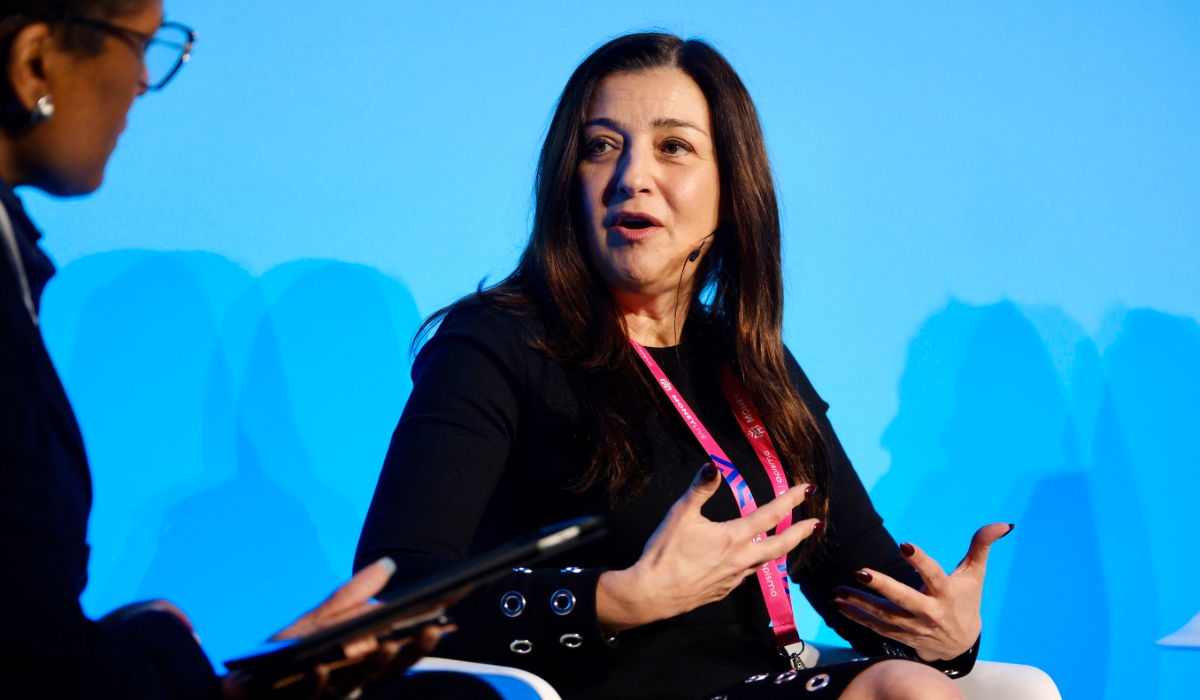 Ulku Rowe on the panel at MoneyLIVE
At this point, modernizing is not just about reducing risk or running away from the mainframe. It is about buying back the ability to move fast. To launch products without months of negotiation with the tech stack and to compete on capability.

Banks used to compete on balance sheet, now they compete on technology.
Ulku Rowe CIO Commercial, Lloyds Banking GroupMy favorite line of the summit came from Ulku Rowe, CIO Commercial at Lloyds Banking Group, who said: “Banks used to compete on balance sheet, now they compete on technology.”
She is right. With AI accelerating every part of banking, that competitive shift is only becoming sharper.
The smartest transformations are disciplined, not dramatic
Another pattern I kept seeing (and applauding) is the move away from big-bang internal engineering efforts. No one is rolling the dice on multiyear, all-or-nothing internal builds anymore.
Instead, leaders are taking a much more pragmatic approach:
Start in an adjacent area where you can move quickly.
-
Prove the architecture works.
-
Then scale with intention.
-
It is measured and it is repeatable.
There is also a growing clarity about where banks should innovate and where they should partner. As Michael Goemans, Head of UK Transactional Banking at Investec, put it: “We will not build core software; we will adopt and parameterize platforms while owning the customer-facing secret sauce.”
We will not build core software; we will adopt and parameterize platforms while owning the customer-facing secret sauce.
Michael Goemans Head of UK Transactional Banking at InvestecThose who will win in the decades ahead are focusing on the customer experience, the IP, and the differentiation. They are letting partners handle the platform so they can focus on what matters.
Mid-sized banks have a real opportunity right now
There is momentum building among mid-sized banks. These institutions are starting to realize they have something special: the scale to invest and the agility to move.
They are not slowed down by massive global operating models. They are not stuck in committee purgatory. And they are under just enough competitive pressure to take bold but smart steps forward.
With progressive modernization now the dominant model, these banks can leapfrog bigger players without the drama. They just need to seize the moment.
AI is everywhere but the conversation is finally grounded
And then, of course, there was AI. You could not walk ten feet without hearing about it, but the tone this year was very different from the hype cycle of 2025. Leaders talked about AI with a refreshing level of practicality: personalization, better decisioning, sharper insights, and migration velocity.
The interesting part is that banks are no longer treating AI as something they will add later once the “real” work is done. They are designing for it now. AI is becoming an architectural question, not a feature request.

Conversations about AI were being had everywhere at MoneyLIVE
To use AI effectively in a responsible, scalable, and safe way, you need an architecture that can support it. Modular, API driven, and real time. The kind of setup that legacy cores were not built for.
This connection between modernization and AI readiness was everywhere at MoneyLive. And it is only going to get stronger.
Looking ahead
I left the summit impressed by the real sense of momentum. Banks are not stuck in strategy mode. They are moving and doing so with a level of clarity and discipline that makes me genuinely optimistic about where the industry is heading.
Huge thanks to everyone I caught up with at the event, I am already looking forward to the next round of conversations.
Continue the conversation with Hugo